Shower & Bathtub Installation in Whittier, CA
Tub replacements, walk-in shower conversions, and new shower valves installed with the drain, rough-in, and testing done before the walls close.
- Valve and drain rough-in.
- Tub or walk-in conversions.
- Free estimates on planned work.
Replacing A Tub Or Building A Walk-In Shower
A shower or bathtub installation in Whittier usually begins with one of three goals: replacing a worn tub, converting a tub into a walk-in shower, or adding a shower where none exists. The visible part is tile and fixtures. The part that decides whether it lasts is the plumbing behind the wall.
Many Whittier bathrooms date to the 1950s and are compact, with a standard tub-shower combination along one wall. That layout affects what fits, how the valve can be reached, and where the drain runs, so the first visit includes measuring the room and looking at the access panel.
Signs It's Time For A New Tub Or Shower
Soft or stained surround
Spongy tile or a stained wall below the tub may mean water has been escaping behind it.
A valve that drips or cannot hold temperature
Worn cartridges and old mixing valves can swing from cold to scalding.
Cracked or chipped tub surface
A damaged enamel or fiberglass surface can leak through hairline cracks.
Slow drain after cleaning
A drain that clogs repeatedly may have a rough trap, poor slope, or an undersized pipe.
Common Project Types
| Project | What the plumbing includes | Things to settle early |
|---|---|---|
| Tub-for-tub swap | New tub set, drain and overflow, and a test. | Tub size and whether the drain position matches. |
| Tub to walk-in shower | New valve, shower drain, and waterproofing. | Floor slope, curb or curbless design, and drain location. |
| New shower in an existing room | Water supply, drain, and vent connections. | Where the drain can connect and how the floor is framed. |
| Valve and trim replacement only | New cartridge or mixing valve and trim. | Access from behind the wall and valve type. |
Leak Behind The Shower Wall?
Call before opening tile. A pressure test often shows if the valve or the drain is the culprit.
Code Details That Affect A Shower
The California Plumbing Code, based on the Uniform Plumbing Code (UPC), calls for shower valves of the pressure-balancing or thermostatic type, so a flush elsewhere does not scald the person in the shower. California also limits new showerheads to 1.8 gallons per minute.
A shower floor needs a proper waterproof membrane, a drain at the lowest point, and a slope toward it. Ask who is responsible for the membrane and for flood testing it, because the plumber, the tile setter, and the general contractor often split the job.
How A Bath Project Runs
Measure
Room, wall access, and drain location are checked.
Rough-in
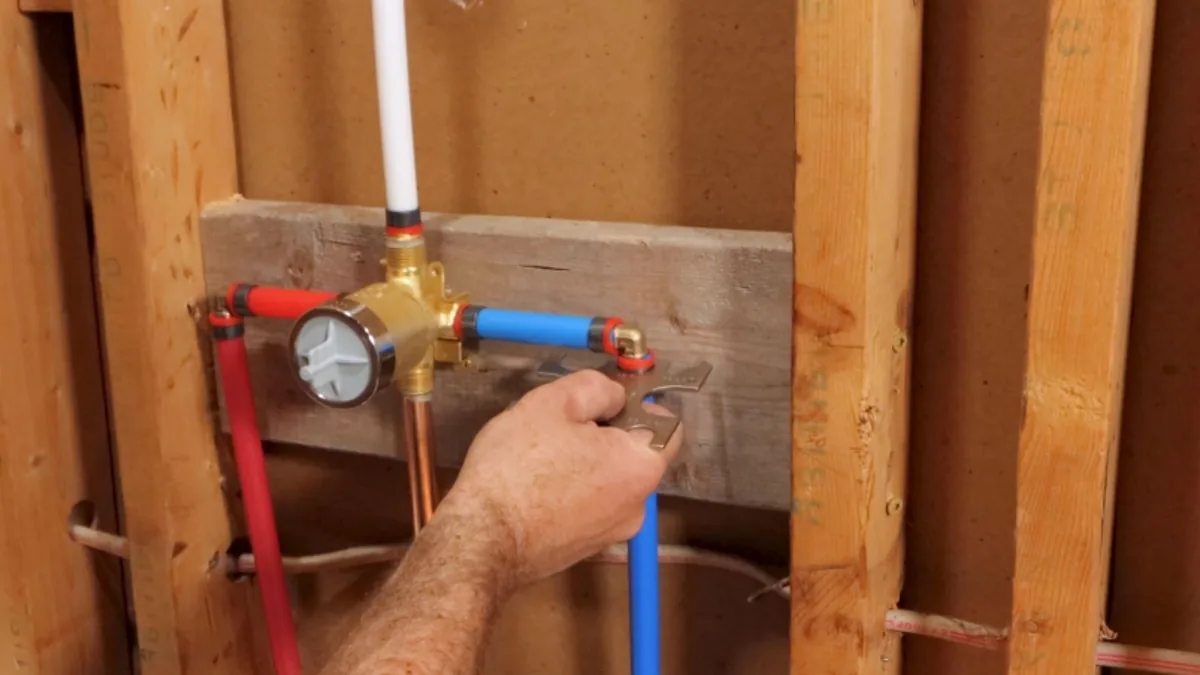
Supply lines, valve, and drain are set before the walls close.
Test
Pressure and drain tests confirm there are no leaks.
Finish
Trim and fixtures go on after the surfaces are complete.
Questions To Ask Before You Start
A bath remodel crosses trades. These questions keep the plumbing on track.
- Who sets and tests the valve and the drain, and when is the plumbing inspected?
- What valve type is proposed, and is it pressure-balancing or thermostatic?
- Is the shower floor waterproofed and flood tested before tile?
- Will an access panel be left behind the valve for future service?
- What happens if opening the wall reveals corroded supply lines or a failing drain?
What Bath Plumbing Costs
Note: if a leak behind a shower caused hidden damage, many policies treat gradual seepage as maintenance. A sudden failure may be treated differently, so document before demolition.
Related Work Around A Bath Remodel
When the wall opens, it is the right time to address nearby lines. A worn fixture shutoff can lead to toilet repair and installation in the same room, and older supply lines may justify a look at home repipe service. If you suspect a hidden leak before demolition, electronic leak tracing can confirm it.
We take on bath plumbing in La Mirada and across Whittier.
Bath remodels in Whittier run from the Craftsman and Spanish Colonial Revival homes of Uptown, where a new valve may meet older galvanized supply lines, to 1950s ranch houses in Friendly Hills with slab floors. The rough-in differs between the two, and a quick look behind the wall before a quote saves a change order.
Shower And Bathtub Questions
Usually yes. The drain position, floor framing, and waterproofing decide how simple it is. A site visit answers it.
Many cities require one for larger bath work and for moved drains or valves. Ask the contractor who pulls it.
Pressure-balancing and thermostatic valves are both common. Thermostatic valves hold a set temperature more precisely and usually cost more.
A straight swap can take a day or two, and a walk-in conversion takes longer because of waterproofing and tile. Ask for a schedule.
A worn cartridge or valve seat is the usual cause. Replacing it is often simpler than replacing the whole valve.
Yes during the work. Ask how many days and whether another bathroom can handle the household.