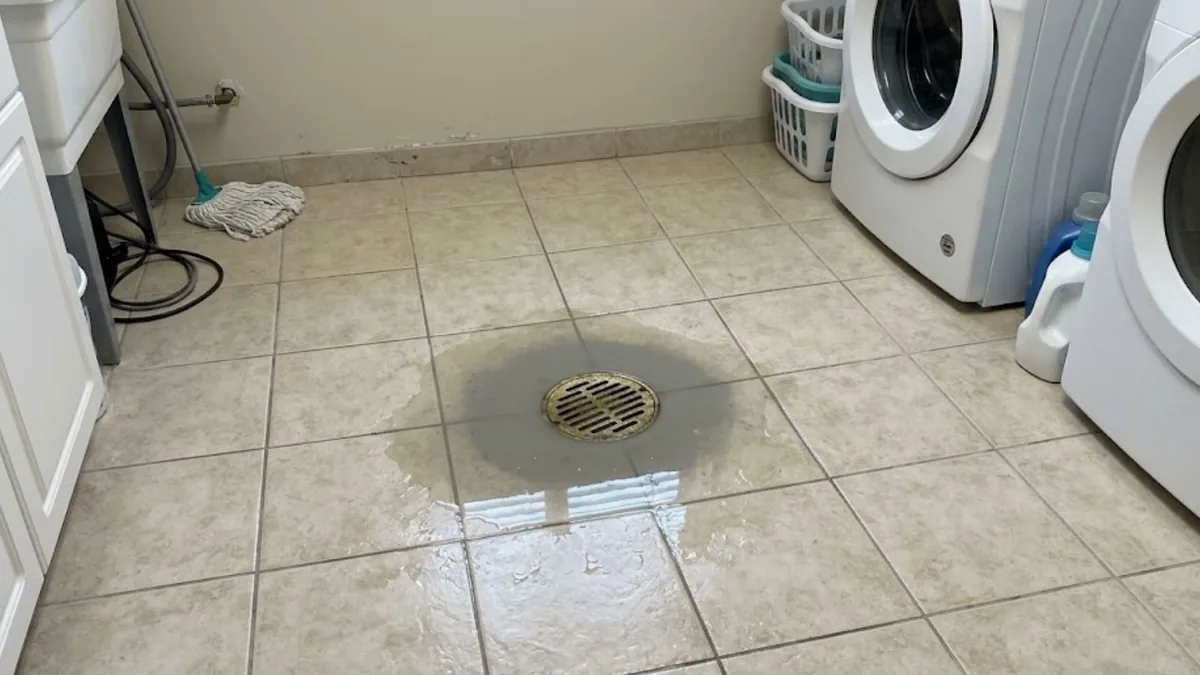
The Short Answer
If sewage is coming up a drain, stop using all water in the house, keep people and pets away from the spill, and do not touch the water with bare skin. Photograph the damage, then call a plumber for a camera inspection to find the blockage. If the camera shows it sits in the public main, call your city or sanitation agency too.
Treat anything the sewage touched as contaminated. Cleanup needs protective gear, and porous materials such as carpet and wet drywall usually have to be thrown away. The plumber fixes the line, and cleanup of walls and floors is a separate job.
What To Do In The First Hour
Work through these in order. Each step limits the spread or protects your claim.
- Stop all water use: no flushing, no showers, no laundry, no dishwasher. Every gallon you send down adds to the backup.
- Keep children and pets out of the affected area, and keep everyone out of the standing water.
- Do not walk through the spill, and do not switch on electrical items near it. If the panel is in a wet room, stay out and tell the dispatcher.
- Photograph the backup, the drains involved, and any damage before anything is moved. Write down the time you first noticed it.
- Call for a plumber and say which drains are affected. The lowest drain that backs up first tells the technician where the blockage sits.
- Open windows if you can do so safely, to ventilate the area while you wait.
Where The Water Shows Up First
Wastewater follows gravity, so the lowest opening in the house usually shows trouble first.
Ground-level tub or shower
Water rising here points to a restriction in the main line downstream of the house.
Floor drain or laundry standpipe
A backup here, especially after running the washer, is a classic main line sign.
Toilets bubbling
Air pushed back by a blockage can burble up through a toilet before water appears.
Every fixture slow at once
A restriction near the cleanout or in the lateral affects the whole house.
Who To Call For What
| Situation | Who to call | Why |
|---|---|---|
| Blocked drain or lateral | A plumber. | A camera and a cable or jetter clear and diagnose the line. |
| Blockage in the street main | Your city or sanitation agency. | The public main is the agency's responsibility. |
| Sewage on floors and walls | A cleanup professional. | Contaminated materials need protective handling and disposal. |
| Damage and loss | Your insurance company. | Coverage depends on your policy and any sewer backup endorsement. |
| Illness after exposure | Your doctor. | Symptoms such as vomiting or diarrhea after contact deserve medical advice. |
Sewage Coming Up Right Now?
Stop using water and call. The emergency line is answered 24/7.
Cleanup Safety: What The CDC Advises
Federal health guidance says to assume that anything touched by flood or sewage water is contaminated with germs. Recommended protective gear includes goggles, an N95 mask or better, heavy-duty gloves, waterproof boots, and protective outer clothing. Wash hands after handling anything exposed, and wash clothes worn during cleanup in hot water and detergent.
Items that cannot be thoroughly cleaned and dried should be discarded. That list includes carpet and padding, rugs, mattresses, upholstered furniture, and drywall and insulation contaminated by sewage. Guidance also recommends drying out within 24 to 48 hours if possible, because mold can start in that window. Never mix bleach with ammonia or other cleaners.
After The Water Goes Down
Clear
The plumber removes the blockage and confirms the line is flowing.
Inspect
A camera pass shows why it blocked, such as roots, grease, or a break.
Clean
Contaminated materials are removed and surfaces are disinfected.
Prevent
Fix the cause, since a repeat backup is likely if you only clear the line.
Insurance, Documentation, And Repeat Backups
Standard homeowners policies often exclude sewer backup unless you added an endorsement for it. Read your policy now, before you need it. After a backup, keep photos, the plumber's invoice, and the camera footage, and tell your insurer promptly. Keep receipts for any cleanup supplies or temporary lodging too, since some policies reimburse them, and ask your adjuster what documentation they require.
A one-time backup from a grease clog is different from a lateral that fails over and over. If the camera shows roots or a cracked section, a cleaning only buys time. Many Whittier-area homes date to the 1950s, so clay laterals with root-friendly joints are a frequent cause.
How To Prevent The Next Backup
Most repeat backups trace to a cause that was never fixed. These habits and checks reduce the odds.
- Keep grease, wipes, and paper towels out of drains and toilets, including products labeled flushable.
- Know where your sewer cleanout is, and keep the area around it clear so a plumber can reach it fast.
- Schedule a camera inspection if the line has backed up more than once in a year or if the home is decades old.
- Cut back or remove trees and large shrubs growing over the lateral, because roots follow moisture into pipe joints.
- Ask your insurer about a sewer backup endorsement before you need one.
Related Help
A blockage that cables cannot hold back is a case for water jetting, and ordinary stoppages start with clogged drain service. If the camera finds a damaged pipe, sewer lateral repair is the lasting fix. This line fixes pipes. It does not do the drying and cleanup of walls and floors, so ask the dispatcher about your options for that step.
In Santa Fe Springs, where homes sit among industrial buildings, kitchen and floor drain backups are common, and the same first-hour steps apply.
Sewer Backup Questions
Stop using water, keep people and pets away, avoid touching the sewage, photograph the damage, and call a plumber for a camera inspection.
Yes. Sewage can carry bacteria, viruses, and parasites, and it spreads fast. Call right away.
No. Chemical cleaners can sit in a blocked line, harm older pipes, and splash technicians. They also do little against roots.
Small spills on hard surfaces can be cleaned with protective gear and disinfectant. Larger backups, or any that reached carpet, drywall, or insulation, are usually better left to professionals.
Federal guidance recommends cleaning and drying within 24 to 48 hours if possible, because mold can begin to grow in that time.
Only if your policy covers it. Many standard policies need a separate sewer backup endorsement, so check your coverage.