The Short Answer
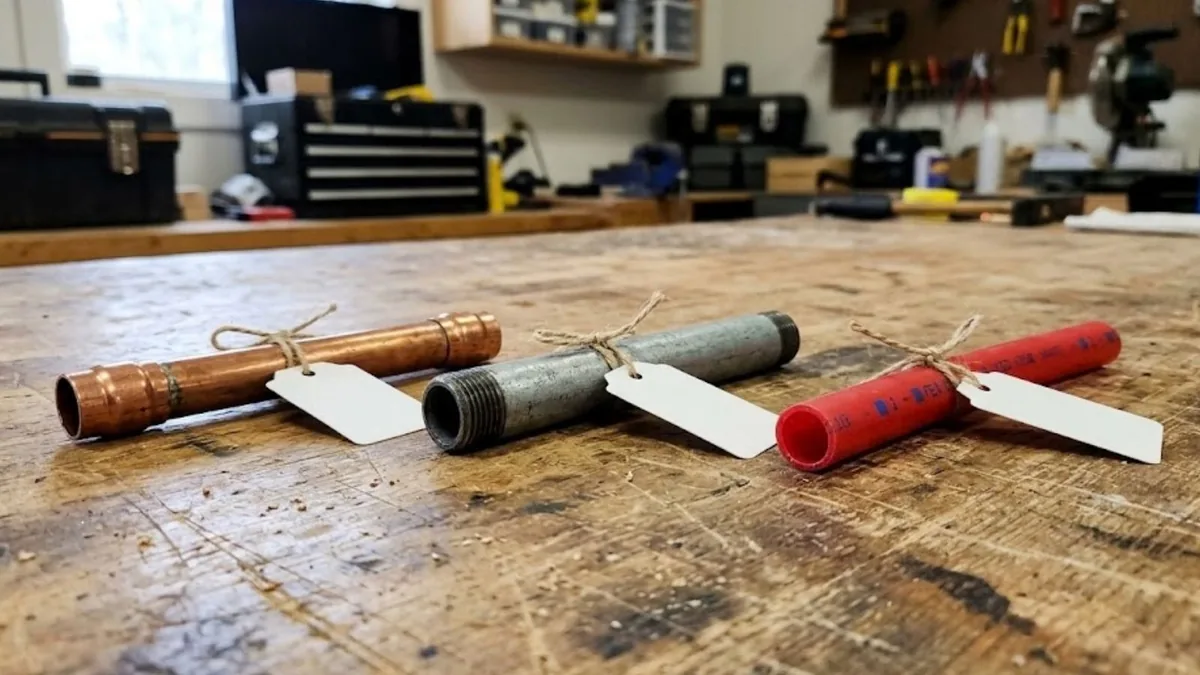
Look at the pipe where it enters your water heater, under a sink, or near the main shutoff. Reddish-brown metal is copper, and dull gray metal with threaded joints is probably galvanized steel that a magnet will stick to.
Flexible red, blue, or white tubing is PEX, and cream or pale yellow rigid plastic is CPVC. Black or gray heavy pipe in the drain line is usually cast iron or plastic.
Supply pipes bring water in, and drain pipes carry it out. They are different materials, and they fail in different ways. This guide covers both.
Supply Pipes: What They Look Like And How To Test
| Material | How it looks | Quick test | Common concern |
|---|---|---|---|
| Copper | Reddish-brown or green with corrosion, often stamped with a type such as L or M, which ASTM B88 defines for copper water tube. | A magnet does not stick, and a scratch shows copper color. | Pinhole leaks and joint corrosion in aging lines. |
| Galvanized steel | Dull gray with threaded joints and fittings. | A magnet sticks, and a scratch shows gray metal. | Rusts from the inside, which lowers pressure and discolors water. |
| CPVC | Cream or pale yellow rigid plastic. | Plastic, so a magnet does not stick. | Can become brittle with age in some installations. |
| PEX | Flexible tubing, usually red, blue, or white. | Bends easily and is plastic. | Needs protection from sunlight before and after installation. |
| Brass fittings | Yellow metal at valves and connections. | A magnet does not stick. | Older brass can corrode or leak at threads. |
How To Test A Pipe Safely
Do these tests on exposed pipe only, and never cut or heat a pipe to identify it.
- Use a flashlight and check under sinks, near the water heater, and at the main shutoff for exposed pipe.
- Hold a magnet to the pipe. If it sticks firmly, the pipe is steel, and galvanized if it is dull gray.
- Gently scratch a small spot with a coin or key. Copper shows a bright reddish color, and galvanized shows silver-gray.
- Look for markings printed on plastic pipe, such as PEX, CPVC, or PVC, along with a size and a rating.
- Photograph what you find, including any labels, so you can show a plumber or inspector.
Why 1950s Homes Matter
The 1950s is Whittier's most common build decade, and homes from that era contain a mix. Many have original copper or galvanized steel supply lines, cast iron or clay drains, and later repairs in plastic. Seven decades is long for any metal pipe, so it is worth knowing which type you have.
A single repaired section can be a different material from the rest. A plumber who replaced a leaking section in the 1990s may have joined copper to galvanized, and mixed metals corrode at the joint. That is a good reason to check more than one spot.
Drain Pipes And Sewer Lines
| Material | How it looks | Notes |
|---|---|---|
| Cast iron | Heavy, dark gray or black, often with bell-shaped hubs. | Durable but can rust and narrow with age. |
| ABS plastic | Black rigid plastic. | Common in homes built or repaired after the 1960s. |
| PVC | White or gray rigid plastic. | Common in newer drain and vent work. |
| Vitrified clay | Buried, and seen at the cleanout as a tan or reddish ceramic pipe. | Roots can enter at the joints. |
Where To Look In The House
Exposed pipe is easiest to read in these spots.
- At the water heater, where cold and hot lines connect and the pipe is usually visible.
- Under kitchen and bathroom sinks, on the supply lines and on the drain trap.
- At the main shutoff valve, often on an outside wall or in the garage.
- In a crawlspace or garage, where pipe often runs along the framing.
- At the sewer cleanout outside, where the end of the drain pipe is exposed.
Not Sure What You Found?
Call and describe or send a photo. A technician can help you identify it.
Pipes To Ask A Professional About
A few finds deserve a professional opinion before you do anything else.
Dull gray, soft metal
Soft metal that scratches bright silver can be lead. Lead plumbing was banned for drinking water in 1986, but old fittings can remain. Get the water tested.
Gray flexible plastic
Polybutylene was used from about 1978 to 1995, which postdates most 1950s builds but can appear in remodels. It has a reputation for failing.
Green crusts or white flaking
Corrosion at joints points to slow leaks or incompatible metals.
Rusty hot water
Orange or brown water often means steel pipe or a water heater tank is rusting.
What A Technician Will Ask And Do
When you call, expect questions about the age of the house, past repairs, and where you saw each material. Photos help the technician decide what to bring and whether the visit needs a camera or a pressure test.
On site, the technician will document what the pipes are made of, test for leaks and pressure, and explain the repair options and their cost before any work starts. New or replacement pipe follows the California Plumbing Code, which is based on the Uniform Plumbing Code (UPC), and drinking water pipe should carry NSF/ANSI 61 certification.
What To Do With What You Learn
Record
Write down each material and where you saw it.
Compare
Match it with known age and failure patterns.
Test
Run a meter test and watch for leaks and pressure drops.
Plan
Decide on repairs or repiping before a failure forces the choice.
Where To Go Next
If your lines are galvanized steel or aging copper with repeated leaks, whole-home repiping is worth pricing. If you suspect a hidden leak, electronic leak tracing finds it without opening walls. For clay or cast iron drains with roots, a camera visit is the first step toward sewer spot repair.
La Mirada was built out quickly in the 1950s, so many La Mirada houses share the same era and the same pipe types. If one house on your street has had repairs, the others probably have the same pipes. Ask neighbors what their plumbers found, since a shared history is a useful clue.
Pipe Material Questions
They are dull gray, joined with threaded fittings, and a magnet sticks to them. A scratch shows silver-gray metal.
Copper is reddish-brown, a magnet does not stick, and a scratch shows a bright copper color. Printed markings often show the pipe type.
They corrode from the inside over time, which reduces water flow and can discolor water. After several decades, replacement is common.
It was used from about 1978 to 1995, so it would appear only if the home was repiped in that period. Check any remodeled areas.
Lead plumbing was banned for drinking water in 1986. It is uncommon in house piping today, but old fittings can remain. A soft, dull gray pipe that scratches bright silver deserves a plumber's opinion and a water test.
Mixed metals corrode at the joint. A plumber can use dielectric fittings or replace the section.