The Short Answer
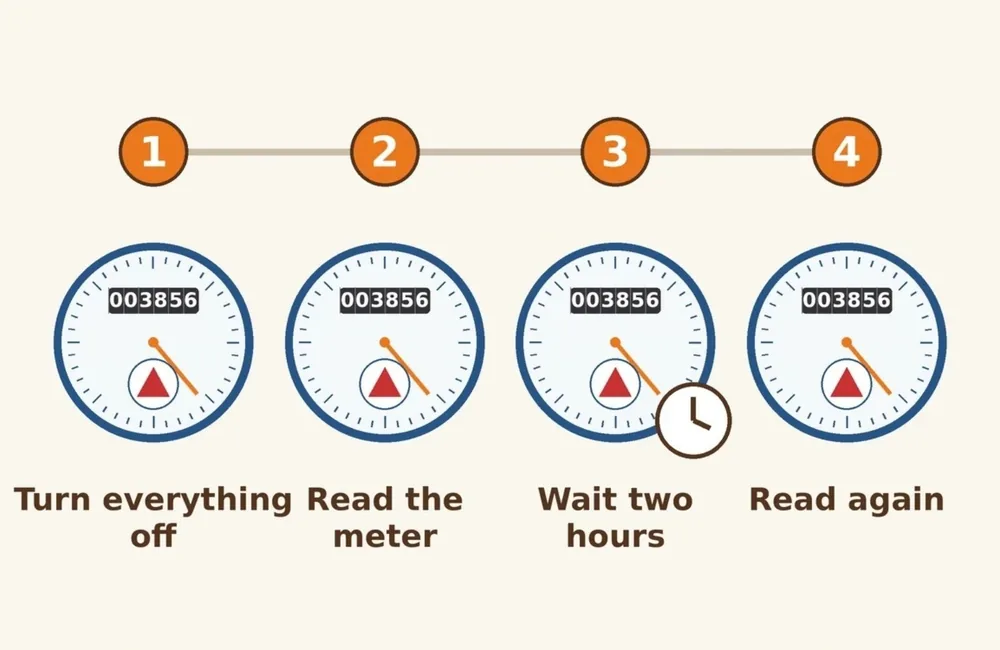
To check for a hidden leak, shut off every water-using fixture and appliance, read your meter, wait about two hours without using water, and read it again. If the numbers changed at all, water is escaping somewhere. If a small triangle or dial on the face keeps spinning with everything off, the leak is active right now.
The test costs nothing and uses only your provider's meter. It also tells you if the leak is on your side of the meter, which decides who needs to fix it. Write the numbers down each time, because a pattern over several days is stronger evidence than a single reading. Take a photo of the meter face too, since a dated image helps if your provider reviews a high bill.
Why It Is Worth Ten Minutes
The U.S. Environmental Protection Agency's WaterSense program reports that the average household's leaks waste more than 10,000 gallons a year, and that ten percent of homes have leaks wasting 90 gallons or more per day. Fixing easily corrected leaks can save about ten percent on a water bill.
EPA also offers a simple winter check. A family of four that uses more than 12,000 gallons a month in winter, when little water goes to lawns, likely has a serious leak. If your bills run higher than that and nobody is filling a pool, start with the meter.
The Two-Hour Meter Test
Do this when nobody will be home or using water for a couple of hours, such as a quiet morning.
- Turn off all water use inside and out, including the dishwasher, washing machine, ice maker, and irrigation controller.
- Find the meter, usually in a ground-level box near the curb or the edge of the property. Lift the lid carefully and brush away dirt and spider webs.
- Look for a small leak indicator on the face, often a triangle or a spinning dial. If it moves with everything off, water is flowing.
- Write down the full reading. Take a photo for reference.
- Wait two hours without using any water, then read the meter again. A change means a leak.
- Close the main shutoff at the house and look at the indicator again. If it stops, the leak is inside or on your side of the main. If it keeps moving, the leak is between the meter and the house.
Reading The Numbers Correctly
| What you see | What it means | What to do |
|---|---|---|
| Indicator spins with everything off | Active flow, so a leak exists. | Run the main shutoff test. |
| Digits changed over two hours | A slow leak, such as a toilet or buried line. | Check toilets, then the yard and slab. |
| Indicator stops when main is closed | The leak is inside the house or at the main valve. | Check fixtures, water heater, and walls. |
| Indicator keeps moving with main closed | The leak is on the line between meter and house. | Mark the wet area and call for detection. |
| No movement at all | No leak detected right now. | Look at high usage from habits or irrigation. |
Units On Your Meter
Meters in Southern California are usually labeled in one of two ways.
Cubic feet
A reading in cubic feet means each unit is one cubic foot, which is about 7.5 gallons.
CCF
One CCF equals 100 cubic feet, which is about 748 gallons.
Gallons
Some meters read directly in gallons, which makes the math simple.
Your bill
Your bill shows which unit your provider uses. Match it to the meter before comparing.
Where The Water Usually Goes
Once the meter confirms a leak, these are the usual suspects, ordered roughly from easiest to hardest to find.
| Suspect | How to check | Typical result |
|---|---|---|
| Toilet flapper | Add food coloring to the tank and wait ten minutes without flushing. | Color in the bowl means a leaking flapper. |
| Irrigation valves and heads | Run each zone and look for soggy ground or constant hissing. | A stuck valve or cracked head is common. |
| Water heater relief valve | Look for a wet or stained discharge pipe near the heater. | Constant drips suggest pressure or valve trouble. |
| Hose bibs and outdoor fittings | Check each spigot for drips when closed. | A worn washer or cracked vacuum breaker leaks. |
| Buried line or slab | Close the main and watch the meter. | A moving meter points to hidden underground loss. |
Meter Moving With The House Off?
Call and share your reading. It helps the technician plan the first test.
If The Meter Says You Have A Leak
Isolate
Close the main and see if the indicator stops.
Check
Do the toilet dye test and look under sinks.
Mark
Note wet spots in the yard or damp floors.
Call
Share your readings so detection can start fast.
Whittier Meters And Providers
Whittier is served by several water providers, including City of Whittier Water, Suburban Water Systems, San Gabriel Valley Water Company, and Orchard Dale Water District. Your bill names yours, and the meter lid often carries its logo. Some providers publish leak guidance or adjustment programs, so ask yours before you fix anything.
If the test points to the buried line from the meter to the house, the repair belongs to the homeowner, and new pipe should meet the California Plumbing Code, which is based on the Uniform Plumbing Code (UPC). Our page on water line repair and replacement explains the options. If the leak is inside and hidden, leak location pinpoints it before any wall is opened.
In Santa Fe Springs, where the water utility authority publishes its own annual report, the same test works. Only the provider you call changes.
Water Meter Leak Questions
Turn off all water, read the meter, and read it again after two hours with no use. Any change means a leak. A spinning indicator with everything off also means water is flowing.
Put a few drops of food coloring in the tank and wait about ten minutes without flushing. If color shows in the bowl, the flapper leaks.
The leak is on the line between the meter and the house. Mark the wet area and call for detection and repair.
Usually the homeowner. Providers generally own the meter and the line on the street side, but ask yours to confirm where the boundary sits.
Some providers offer adjustments after a documented repair. Ask yours, and keep repair invoices and photos.
EPA reports that an average household's leaks waste more than 10,000 gallons a year, and a faucet dripping once per second wastes more than 3,000 gallons a year.