The Short Answer
A backflow test notice from your water provider means a backflow prevention device on your property must be tested and the results sent to the provider by a deadline. Find the device, read the deadline on the notice, hire a tester your provider accepts, and make sure the passing report reaches the provider on time.
Do not ignore it. Providers can follow up with reminders and penalties, and California's cross-connection rules allow suppliers to take action on connections that are not protected. Details depend on your provider, so call the number on the notice if anything is unclear.
Why Providers Send Them
Backflow is water flowing the wrong way. A drop in pressure in the main can pull water from a sprinkler line, a boiler, or a fire system back toward the public supply, bringing fertilizer, chemicals, or stagnant water with it. A backflow assembly is the mechanical check that prevents this.
California's cross-connection control rules are in Title 17 of the California Code of Regulations. They direct water suppliers to protect the public system, and they call for testing of assemblies on a regular schedule, commonly yearly. Each supplier runs its own program, with its own list of testers, forms, and deadlines.
The assemblies themselves are built to published standards such as ASSE 1013 and ASSE 1015. Installation follows the California Plumbing Code, which is based on the Uniform Plumbing Code (UPC).
Reading The Notice
| Item on the notice | What it tells you | What to do |
|---|---|---|
| Deadline | The date test results must reach the provider. | Book the test several weeks early. |
| Account or service address | Which connection the device protects. | Use it when you schedule and when results are filed. |
| Device location or type | Where the assembly sits and what kind it is. | Walk the property and find it before the tester arrives. |
| Approved tester list | Who the provider accepts to test. | Choose from that list, or ask if a tester qualifies. |
| Submission method | Paper form, email, or online portal. | Confirm who files, you or the tester. |
What To Do Before The Tester Arrives
A little preparation avoids a second trip.
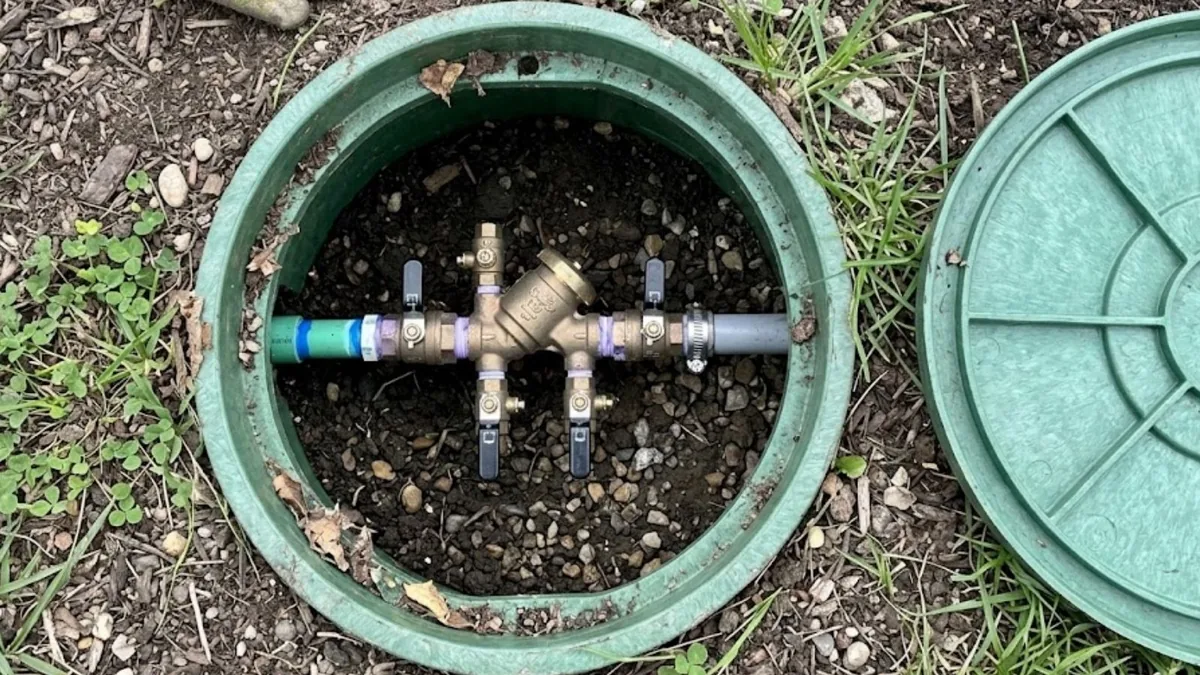
- Locate the device. Irrigation devices are often in a green box or against the house, and fire line devices may be in a vault or a room.
- Clear plants, debris, and obstructions so the tester has access to the test ports.
- Turn off your irrigation controller for the day, since water to the system may be shut off briefly.
- Gather the notice, your account number, and any past test reports.
- Ask the tester who will submit the results, and ask for a copy for your records.
Backflow Deadline Coming Up?
Call with your notice. We can plan the visit around your provider's due date.
What Happens After The Test
Pass
Results are recorded and filed with the provider.
Fail
The device is repaired or replaced, then retested.
File
The passing report reaches the provider before the deadline.
Repeat
Mark your calendar for next year's test.
Signs A Device May Fail
Water spitting from a relief port
A reduced pressure assembly that dumps water can have a fouled check valve.
Dripping test cocks
Leaking test ports point to worn seals.
Cracked or damaged body
Impact or freezing can crack a bonnet or body.
A missed prior test
A skipped year is the most common reason a provider escalates.
Related Help
Our page on backflow testing and prevention explains the device types and what a test visit includes. Businesses with kitchens, boilers, or fire lines should also look at commercial plumbing service, and a leak on the line feeding the device falls under buried water line repair.
Orange County addresses such as La Habra follow the provider serving that address, and the provider may differ from the one on the next street, so read your own notice and not a neighbor's.
Home Devices Versus Business Devices
The kind of device on your property usually follows the hazard it protects against.
Typical home device
- Often a vacuum breaker on an irrigation system.
- Installed above the highest sprinkler.
- Simple to reach and test.
- Needs an annual test if your provider requires it.
Typical business device
- Often a reduced pressure or double check assembly.
- Protects boilers, fire lines, and process water.
- May sit in a vault or a utility room.
- Often has stricter reporting rules.
How Providers Differ
Whittier-area water providers each run their own cross-connection program. One may use an online portal where testers upload results, another may mail paper forms, and a third may send reminders by email before escalating. The deadline, the list of accepted testers, and the filing method are all set by the provider, so a neighbor served by a different utility may follow different steps.
That is why the notice itself is your most important document. Read the whole letter, call the number on it if any step is unclear, and keep a record of the date you filed.
If You Rent Or Manage A Property
Tenants who receive a notice should pass it to the landlord or property manager right away, since the device usually belongs to the property owner. Managers of multi-tenant buildings often have several devices, and each may have its own deadline.
Keep a simple spreadsheet of every device, its location, its test date, and the provider's due date. A schedule like that turns an annual scramble into a routine, and it gives a new manager or owner a clear record of what has been done. Review it every quarter so no date sneaks up on you.
Common Mistakes With Backflow Notices
Waiting until the last week
Testers book up before deadlines, and a failed device needs time for repair and retest.
Hiring an unapproved tester
A test the provider will not accept has to be paid for twice.
Assuming the tester files the result
Confirm who submits the report, and keep a copy.
Burying the device in landscaping
Plants and mulch that block the test ports slow the visit and can raise the cost.
Backflow Notice Questions
Usually yes. It comes from your water provider. Confirm by calling the number on your bill and not the one on an unfamiliar letter.
Many assemblies are tested yearly. Your provider sets the schedule and states the due date on the notice.
A tester your provider recognizes. Ask for its approved list before you book.
It must be repaired or replaced and retested, and the provider usually sets a deadline.
Many homes with irrigation have one, and some providers require annual testing. Check your provider's program.
Providers can send reminders and take further steps. Contact the provider before the deadline if you need more time.